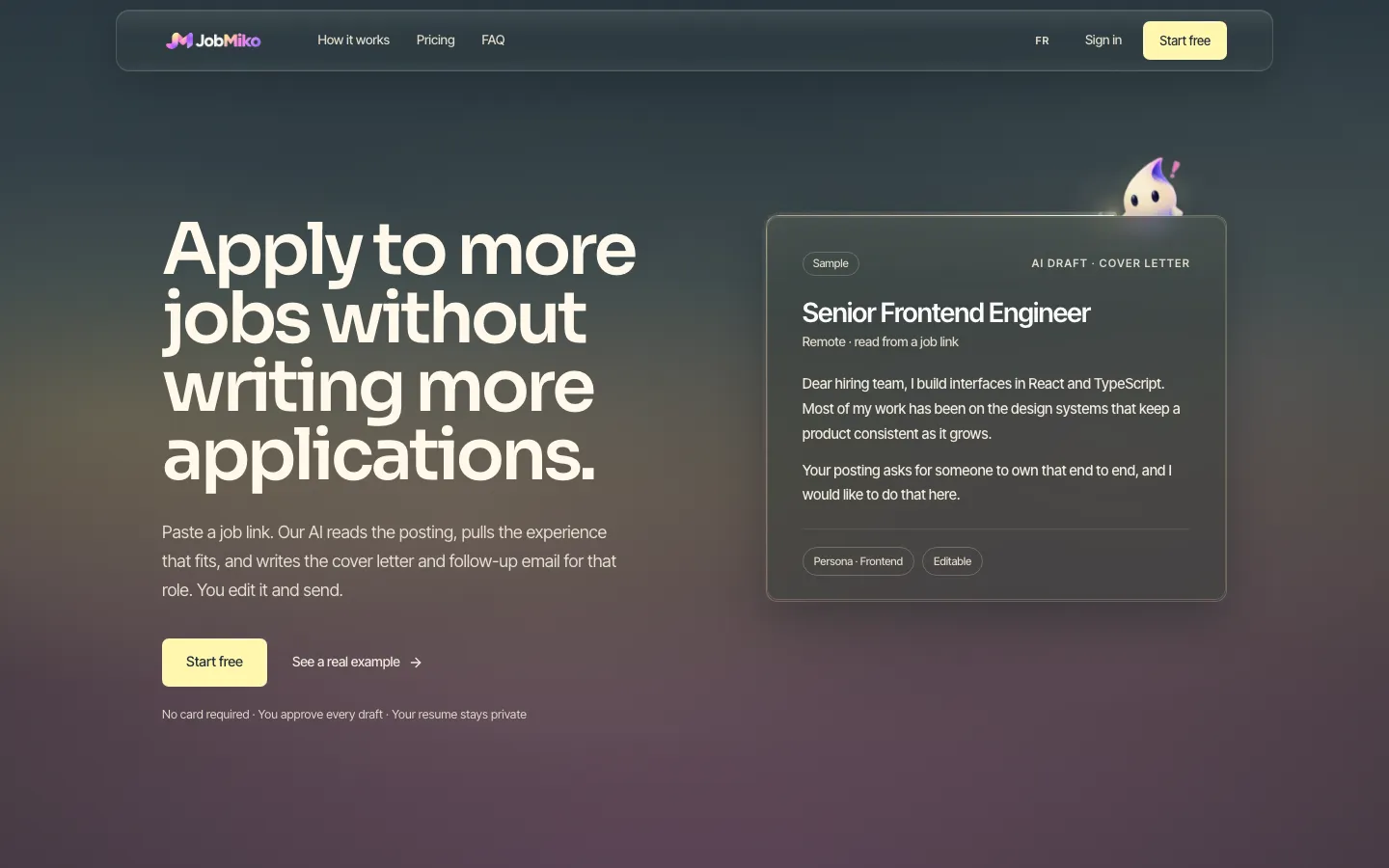
Jobmiko
Job applications tailored to every role, drafted with AI.
- Next.js
- React
- TypeScript
- Tailwind CSS
PORTFOLIO 2026
000COLLECTION ’26
I design and ship production applications by orchestrating coding agents: specification, parallelisation, review and hardening.
Specify, parallelise, verify again. The code goes to production.
01 · Selected work
Four recent products, from client SaaS to an enterprise suite. Each card opens a case study covering the problem, the decisions and what was built.
Job applications tailored to every role, drafted with AI.
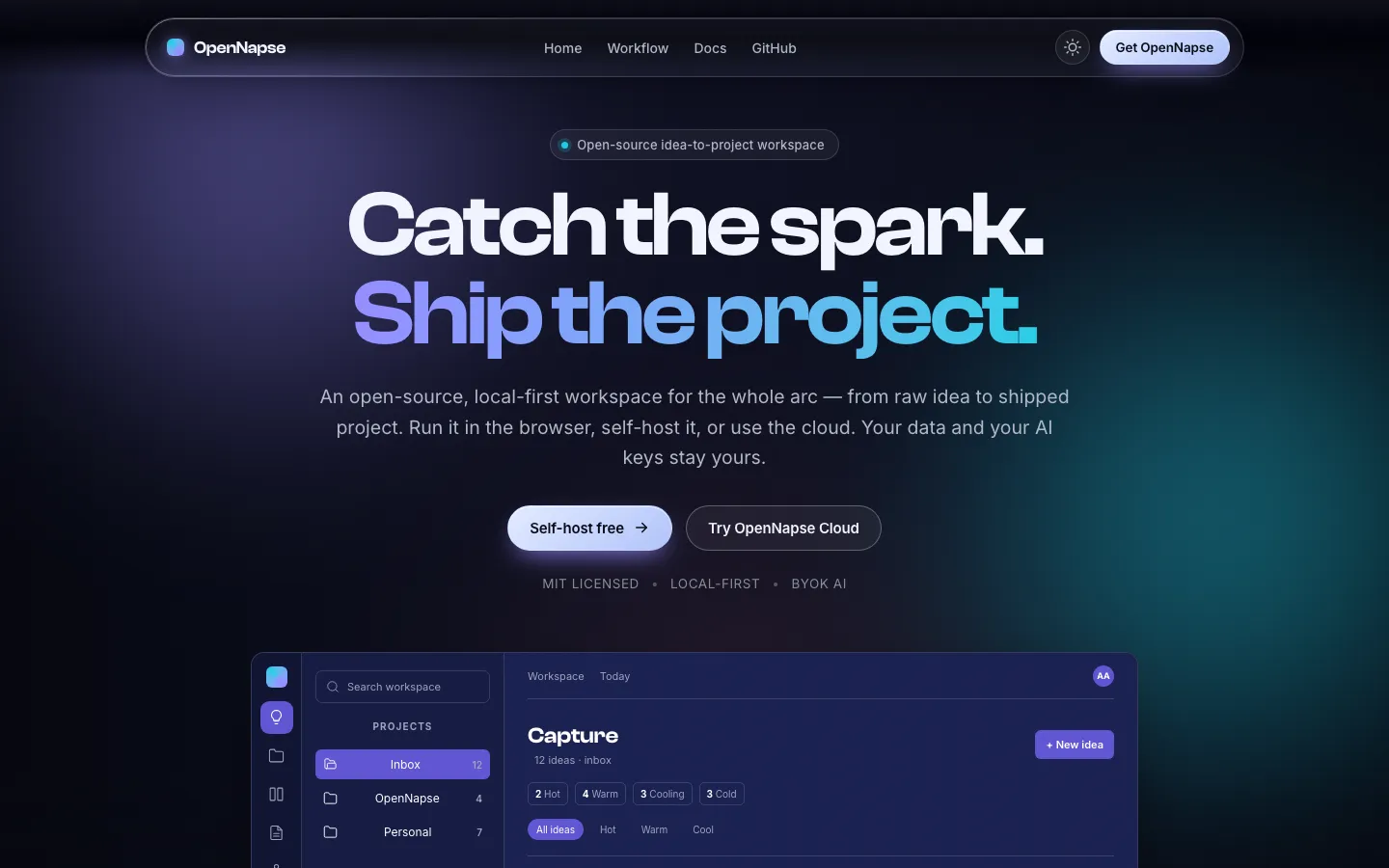
From scattered ideas to shipped projects.
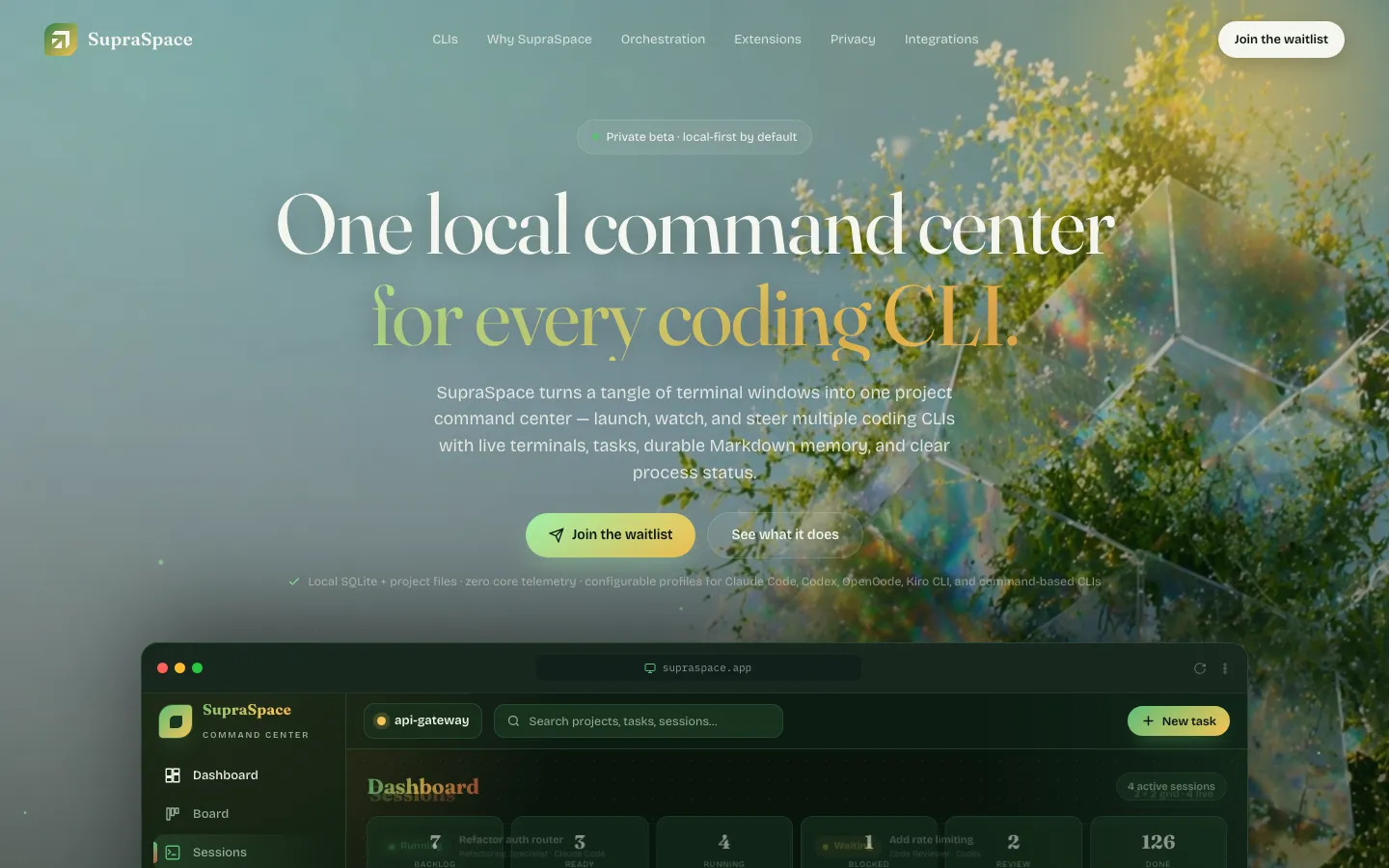
One command centre for every coding CLI.
Architecture
Procure-to-Pay · E-Solution
The Procure-to-Pay module of an enterprise suite.
02 · Stack
Every node carries a delivery decision: an interface talking to the right store, a module served by CI, local memory that stays on disk.
Hover a node to see the projects that use it.
STACK / MAP
2026
Jobmiko · Next.js · Supabase · Cloudflare
The technologies I use in production.The three families of the stack, at a glance.
03 · Services
Four steps, one chain: the brief becomes a specification, agents execute, review decides, production holds.
A brief becomes an executable specification: contracts, acceptance criteria, edge cases, verification plan.
Several agents in parallel on disjoint scopes, coordinated through MCP, with project memory and review at each step.
Generated code is not shipped as it comes. Architecture, edge cases, security and data integrity are reviewed and tested.
CI/CD, environments, observability and handover. The deliverable is a system that runs and that another team can pick up.
04 · Lab
Six short experiments, from agent memory to delivery tooling.
View on GitHub (opens in a new tab)05 · Notes
06 · About
I design and ship production applications by orchestrating coding agents. The work runs in four stages: specify, orchestrate, verify, ship. Agents speed up execution; the specification and the review stay mine.
The method comes from the tooling I built for myself: SupraCortex, local-first project memory for coding agents; SupraSpace, a local command centre for coding CLIs; FlowFactory, an experiment in generating n8n workflows.
The base remains production: the Procure-to-Pay module of SEMS at E-Solution since August 2024, with Laravel, GitLab CI/CD and Docker, after an internship on fleet-management submodules from February to July 2024. I use Laravel, Node.js or React when they are the right tool, never as an argument in themselves.
Method
Contracts, acceptance criteria and edge cases are written before the first line. The spec serves both the agents and the review.
Agents work in parallel on disjoint scopes, with shared project memory and a review at every step.
Architecture, security and data integrity are reviewed, and tests pass in CI before every integration.
CI/CD pipelines, Docker environments and handover documentation, so another team can carry on.
Why this is different
StackLaravel · PHP · Node.js · React · Next.js · TypeScript · Tailwind · Supabase · SQLite · Docker · GitLab CI
07 · Contact
Tell me the context, the problem and the deadline. I reply in French or English, from Casablanca.
abbassianas43@gmail.com
Elsewhere
Availablepermanent & freelanceUTC+1No form, no tracking: one email is enough.